
Sewer Tap Repair & Replacement in Denver
Sewer tap repair in Denver: signs of a failed tap, why street cuts and permits are needed, who is responsible and cost. Free written estimates from Go Direct.
Your sewer line runs from your house to a city main buried under the street or alley. The spot where the two join is called the tap. When the tap cracks, separates or fills with roots, sewage has nowhere to go.
Sewer tap repair is one of the bigger jobs on a sewer line because the work happens in the public right-of-way, not your yard. This guide covers what the tap is, the signs it has failed, why the street gets opened, who usually pays and what it costs. We’re Go Direct Services, a family-owned sewer and water line contractor based in Commerce City and serving the Denver metro.
What is a sewer tap?
Every home has a private sewer pipe called a lateral, or service line. It carries everything from your toilets, showers and floor drains out to the public sewer main. The tap is the physical connection where your lateral enters that main.
In most Denver neighborhoods, the main runs down the street in front of the house or under the alley behind it. That puts the tap under asphalt or concrete, often deeper than the rest of your line.
Old taps versus newer taps
Older taps were often made by breaking into the main and mortaring a clay fitting in place. Newer taps use a saddle or wye fitting built to seal against the main. The older style is more likely to leak, shift or let roots in as the decades go by.
What are the signs of a failed sewer tap?
Inside the house, a bad tap looks like any other sewer problem. The difference shows up on camera. Common signs include:
- Repeated backups at the lowest drain, usually a basement floor drain, even after the line is cleaned.
- Slow drains throughout the house, not just at one fixture.
- Gurgling toilets when the washing machine or a tub drains.
- Roots that come back fast after the line is cleared, especially near the far end of the line.
- A sinking spot in the street or alley right above where your line connects.
- A camera that stops short because of an offset, break or blockage right where your pipe meets the main.
A sewer camera inspection is the only way to know for sure. We run the camera from a clean-out or drain and measure the distance to the problem. If the defect sits at the very end of the line, the tap is the likely cause.
Why does sewer tap repair mean cutting the street or alley?
The tap is attached to the city main, so the only way to reach it is to dig down to the main. In most cases that main is under a paved street or alley.
Street or alley cuts
The pavement is saw-cut, removed and excavated down to the main. The hole has to be large enough to work in safely. Deeper excavations also need shoring so the walls can’t cave in.
Traffic control
Working in a street means signs, cones and barricades, and sometimes flaggers or a lane closure. The city decides what traffic control a location needs.
Permits
Digging in the public right-of-way generally requires a city permit, and often an inspection before the hole is filled. Requirements and fees vary from city to city. We confirm what applies to your address before the job is scheduled.
Asphalt or concrete patching
After the tap is repaired and inspected, the trench is backfilled and compacted in layers. The street or alley is then patched with asphalt or concrete to the city’s standards.
None of these costs exist on a repair in your yard.
Who is responsible for the sewer tap in Denver?
In most Denver-area cities, the homeowner typically owns the sewer lateral all the way to the main, including the tap. The city or sanitation district owns the main itself.
The rules aren’t identical everywhere. Some districts handle certain repairs at the main, and some set their own requirements for who can work on a tap. Before any work starts, confirm with your local utility or sanitation district who owns which part of the line.
Not sure who’s responsible? Get the camera video first. It shows exactly where the defect is, which makes the conversation with your utility much simpler.
How does sewer tap repair and replacement work?
Most tap repairs follow the same steps.
- Camera inspection. We scope the line, locate the defect and show you what we find.
- Written estimate. You get a free written estimate that spells out the full scope, including the street or alley work.
- Permits and locates. We confirm permit requirements and request utility locates, so gas, water and other buried lines are marked before digging.
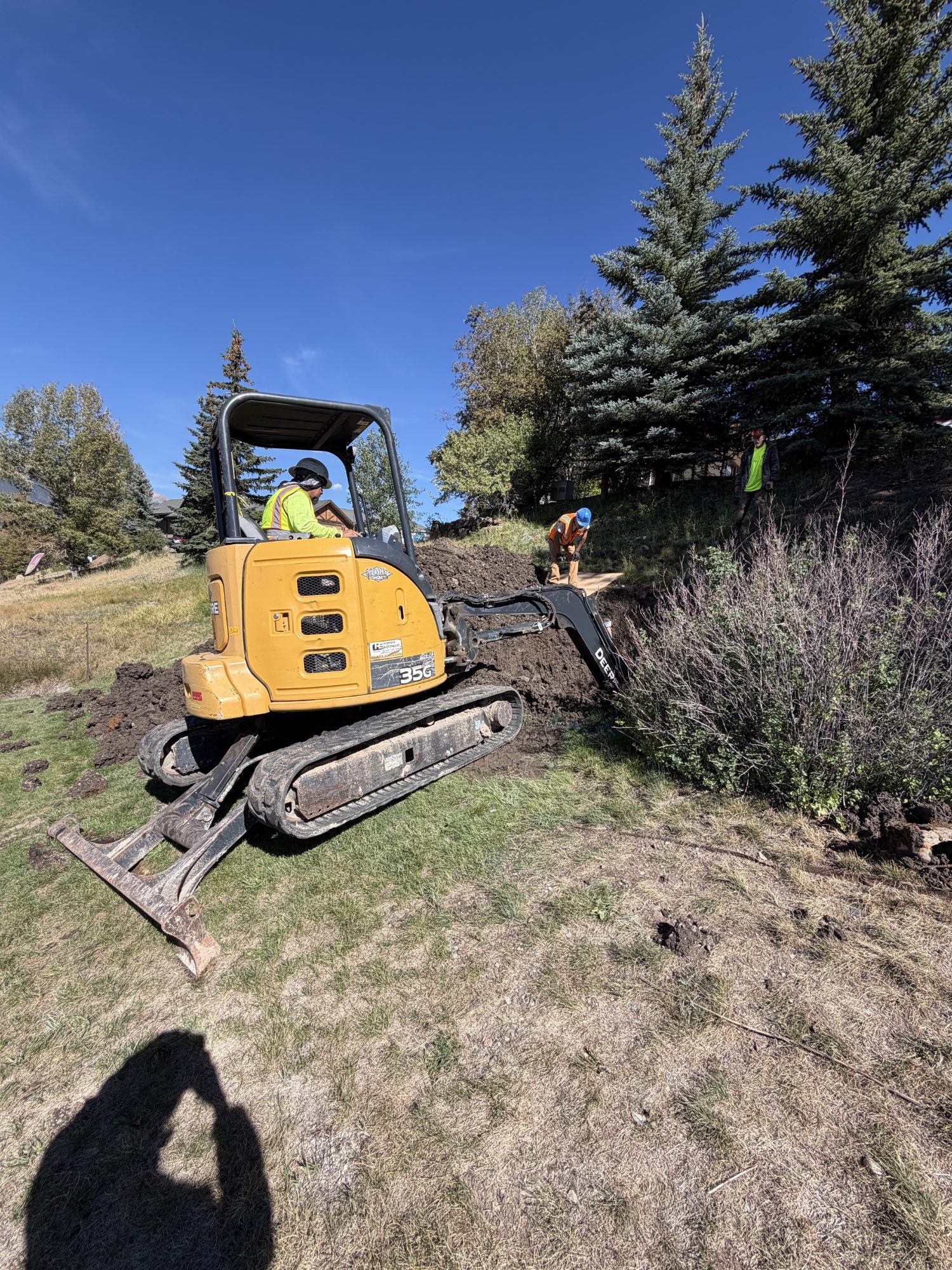
- Excavation. The pavement is cut and the hole is dug down to the main, with traffic control in place.
- Repair or replace the tap. The failed connection is removed and a new fitting is installed on the main.
- Inspection and backfill. The work is inspected where the city requires it, then backfilled and compacted.
- Patching. The street or alley surface is restored with asphalt or concrete.
If the rest of your lateral is also failing, replacing the whole line at once often makes sense. Learn more about sewer line repair and replacement, or see whether pipe bursting could handle the yard section without a long trench. If only one short section near the house is bad, a sewer spot repair may be all that portion needs.
Think your sewer tap has failed? Start with a $99 camera inspection.
How much does sewer tap repair cost in Denver?
From our recent jobs, street and alley tap work often runs into five figures. The street cut, traffic control, permits and patching drive much of that cost, on top of the digging and pipe work.
The biggest factors are:
- Whether the main is under a street or an alley
- How deep the main is
- The surface that has to be cut and patched, asphalt or concrete
- The traffic control the city requires
- How much of your lateral also needs replacing
Your price depends on what the camera shows; every estimate is free and in writing. For a wider look at pricing, see our guide to sewer line replacement cost in Denver.
We offer in-house 0% financing for up to 12 months on qualifying jobs, with 20% down, no credit check and autopay. Wisetack monthly payments are available for larger jobs, subject to credit approval.
What warranty comes with sewer tap work?
Our sewer warranties depend on the type of work done:
- Full sewer line replacement: 20 years
- Trenchless replacement (pipe bursting): 10 years
- Spot repairs: 3 to 5 years
Your written estimate states which warranty applies to your job. Our warranties are transferable to a new owner, which matters if you plan to sell the home.
Sewer tap repair FAQ
Can a sewer tap be repaired without digging up the street?
For the work we do, no. The tap sits on the city main, so it has to be exposed to be repaired or replaced. Trenchless methods can replace the lateral in your yard, but the connection at the main still needs an excavation.
How do I know the problem is the tap and not the rest of my line?
A camera inspection tells you. We measure the distance from the access point to the defect. If the break, offset or root mass is right where your pipe meets the main, the tap is the problem.
Does the city pay for sewer tap repairs?
In most Denver-area cities, the homeowner typically owns the lateral all the way to the main, including the tap. Some districts handle parts of the work differently, so confirm with your local utility before work begins.
Can I use my plumbing during a tap repair?
While your line is disconnected from the main, you’ll need to avoid running water or flushing. We’ll tell you before that point in the job and let you know as soon as service is restored.
Do I need a permit for sewer tap work?
Work in a public street or alley generally requires a city permit and often an inspection. Requirements vary by city, and we confirm what applies to your address before scheduling.
Questions about your line? Call us at 303-288-0039 or book a camera inspection online.
Sewer or Water Line Problem? We Can Be There Today.
Slow drains, backups or a soggy spot in the yard usually point to a sewer or water line problem. Call for a free estimate or book online, with same-day camera inspections across the Denver metro area.